
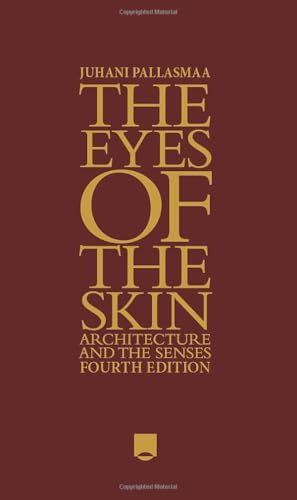
The eyes of the skin : architecture and the senses / Juhani Pallasmaa.
Material type: TextPublisher: Hoboken, NJ : Wiley, 2024Edition: Fourth editionDescription: 1 online resourceContent type:
 - text
- computer
- online resource
- 9781394200672
- 720.1 23/eng/20231206 PAE
- NA2500
| Item type | Current library | Call number | Copy number | Status | Date due | Barcode |
|---|---|---|---|---|---|---|
 Books
Books
|
Seminar Library, Department of Architecture General Stacks | 720.1 PAE (Browse shelf(Opens below)) | 1 | Available | 0082395 |
Browsing Central Library, SUST shelves, Shelving location: General Stacks Close shelf browser (Hides shelf browser)

|

|
|

|

|

|

|
||
| 720.1 BUS The business of architecture : | 720.1 MOP Principles of architecture / | 720.1 MOP Principles of architecture / | 720.1 PAE The eyes of the skin : architecture and the senses / | 720.1 PAT The thinking hand : existential and embodied wisdom in arthitecture / | 720.103 HAP The placemakers' guide to building community / | 720.103 LET Three cultural ecologies / |
Includes index.
"First published in 1996, The Eyes of the Skin is a classic of architectural theory. It asks the far-reaching question why, when there are five senses, is one single sense -- sight -- so predominant in architectural culture and design? With the ascendancy of the digital and the all-pervasive use of the image electronically, the subject is all the more pressing and topical since the first edition's publication. Juhani Pallasmaa argues that the suppression of the other four sensory realms has led to the overall impoverishment of our built environment, often diminishing the emphasis on the spatial experience of a building and architecture's ability to inspire, engage and be wholly life enhancing. For a student reading this text for the first time, The Eyes of the Skin is a revelation. It provides a fresh, compelling insight into architectural culture which continues to inspire more than a quarter-century after its initial publication. This fourth edition presents the author's latest views on the emphasis of place, unfocused perception, sensory issues, and existential experience. It also includes updates and clarifications throughout, to reinforce how our sense of self in the world remains our most important sense and has the greatest impact on today's architecture"-- Provided by publisher.
Description based on print version record and CIP data provided by publisher; resource not viewed.
There are no comments on this title.